


From Tokyo neighbourhoods to mountain towns and historic Kyoto What better way to really get under the skin of Japan than through its food? Food in Japan tells a story. It can take you from a tiny neighbourhood kitchen to a centuries-old tea house; from ramen eaten alongside Tokyo office workers to vegetables that have been cultivated since the days of the samurai. But this is about much more than what ends up on the plate. Food becomes a way into Japan itself: its neighbourhoods, traditions, landscapes and everyday life. This Tell Tale trip blends old and new Japan throughout: futuristic Tokyo and its older neighbourhoods; Kanazawa’s preserved geisha and samurai districts; fairy-tale mountain villages of steeply thatched farmhouses tucked between forested hills; and Kyoto, where some of Japan’s most refined traditions sit alongside the food people actually cook at home. Along the way there are markets, restaurants, tea, sake and home cooking, but also temples, gardens, old merchant towns, mountain scenery and plenty of time to explore for yourselves. And don’t worry if sushi and sashimi aren’t really your thing. Japanese food is far broader than that, from tempura, ramen and gyoza to vegetables, sweets and wagyu beef so good the locals tend to keep it for themselves. This tour is entirely private, blending time with knowledgeable guides and local people with time to yourselves. It is deliberately well paced, with no unnecessary early starts and no rushing from one experience to the next. We’ve thought about the journeys too: private car transfers at the airports mean you won’t be expected to work out public transport after a long flight, and we choose trains and timings that help the trip flow smoothly rather than leaving you sitting around with your bags or stepping straight off a train and into an activity. Day 1 recommended departure from the UK on Sunday or Monday We recommend flying from the UK on a Sunday or Monday. There’s a little more to this than flight timings: we design our itineraries around the places you’ll visit and the people you’ll meet. Markets, small restaurants, family-run businesses and specialist experiences often have their own closing days, and some places are simply better visited on certain days of the week. Starting on a Sunday or Monday allows the different parts of this Tell Tale trip to fall into place as smoothly as possible. Day 2 meals on the plane We love this area because, despite being very central and well connected, it has a neighbourhood feel. Shiba Park, one of Japan’s earliest public parks, opened in 1873, though some of the great trees shading its paths have stood here for centuries. Historic temples and shrines stand around them, while Tokyo Tower rises above the greenery, completed in 1958 as Japan rapidly rebuilt after the war. Beyond them is the Tokyo of today: trains, skyscrapers, tiny restaurants and busy streets. Settle into your charming hotel and stretch your legs in Shiba Park, or have a nap; it’s entirely up to you. You don’t need to go far for dinner. There are small neighbourhood restaurants only a few minutes away, or you could make your first evening rather more glamorous with dinner overlooking the illuminated Tokyo Tower. Alternatively, seek out one of the area’s fashionable bars and lounges. We’ll put plenty of tried-and-tested ideas in your Tell Tale pack. You have a lot of eating ahead of you, so pace yourself!
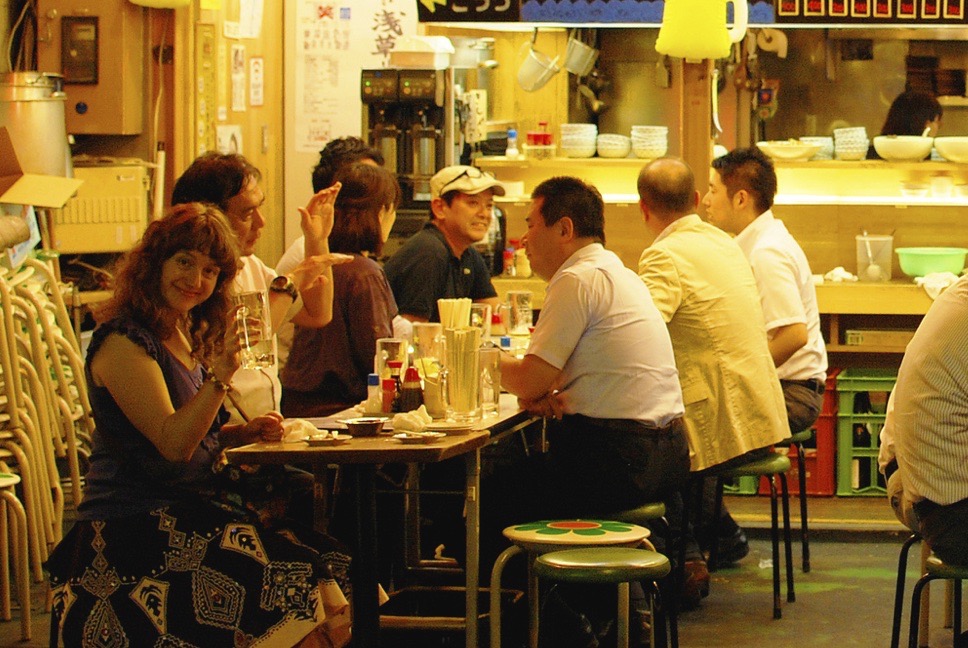
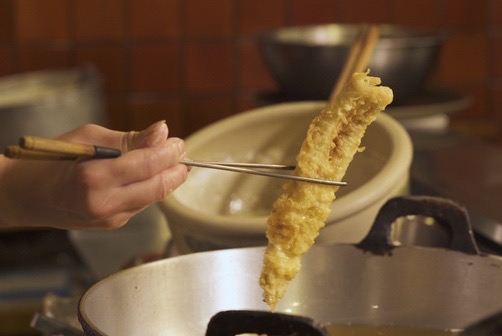
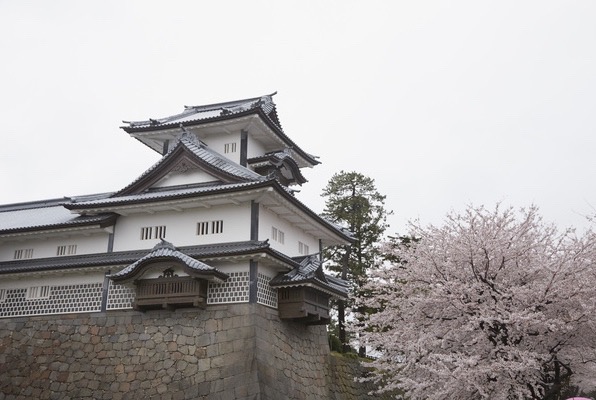
Time to swap incense and temple roofs for one of Tokyo’s most entertaining shopping districts: Kappabashi. This is where the restaurant trade comes to shop, so the streets are packed with knives, lacquerware, chopsticks, ceramics and every imaginable bit of kitchen equipment. And then there’s the replica food. What started as a practical way for restaurants to show customers exactly what was on the menu has become an art form in its own right. You’ll see bowls of ramen with noodles suspended mid-air, tempura with perfectly crisp-looking batter and glossy slices of sushi that are almost impossible to tell from the real thing. Some shops still make these displays by hand; the results are practical, meticulous and just a little bit eccentric. Now it’s time for lunch, and today it’s tempura. Its roots lie in frying techniques introduced by Portuguese traders, while the style we know today developed as street food in old Tokyo in the 18th century. Over time, it became more refined, but the best tempura still has a light, crisp coating that lets the ingredient's flavour shine through. The rest of the afternoon is flexible, with plenty of time to see a little more of Tokyo. You might head across to Shinjuku to see another face of the city: skyscrapers, giant department stores and some of the busiest streets in the city; or carry on exploring somewhere that has caught your interest. Your guide is with you for the full day and will also show you how to use Tokyo’s trains and underground with the prepaid travel card in your Tell Tale pack. If you’d rather have a break before the evening, you can simply head back to the hotel. This evening brings a completely different Tokyo. You’ll meet an expert food guide and explore Yurakucho, where tiny restaurants and drinking spots nestle beneath the railway tracks. This is where office workers head after work rather than somewhere geared towards tourists: lively, convivial and very Tokyo. Your guide will take you into the sort of places you could easily walk straight past if you didn’t know they were there. You’ll try a succession of Japanese dishes such as yakiniku, where meat is grilled at the table, before finishing with ramen or something sweet. There is plenty of food included and, with a few drinks along the way, it makes for a great night out. Day 4 breakfast, lunch At its heart is Yanaka Ginza, an old-fashioned neighbourhood shopping street where local people still come for groceries, prepared food and everyday bits and pieces. The area has a long association with cats, not least because cats traditionally roamed freely around Yanaka’s many Buddhist temples. These days the feline theme is everywhere: look carefully and you’ll spot wooden cat sculptures tucked around the street, along with cat signs, decorations and even cat-shaped snacks. You’ll wander through the neighbourhood, stopping along the way to try a mixture of everyday Japanese favourites, traditional snacks and sweets. As ever, because it’s private, there’s plenty of time to chat, ask questions and follow whatever catches your interest. Spend the rest of the afternoon and evening at your leisure. There’s so much to do in Tokyo, and we’ll give you plenty of ideas for making the most of your free time in your Tell Tale pack. Day 5 breakfast, lunch Together you’ll prepare a Japanese meal including grilled pork, ramen and gyoza, picking up some of the little techniques that rarely make it into a recipe book. Cooking with someone in their own kitchen gives you a very different insight from a formal class: there’s time to chat, ask questions and see how an everyday Japanese kitchen works. Then, of course, you get to feast on your efforts. After lunch, we recommend wandering around the local neighbourhood before heading back to central Tokyo. The rest of the day is yours; perhaps revisit somewhere you loved, explore somewhere new or just enjoy your last evening in Tokyo. Day 6 breakfast, dinner Kanazawa feels quite different from Tokyo. This old city escaped bombing during the Second World War, so you can still wander through former samurai neighbourhoods, along old waterways and between the wooden tea houses of its historic geisha districts. It is also a wonderful place to eat. The Sea of Japan provides superb seafood, while the surrounding region produces rice, beef and a remarkable range of local vegetables. Kanazawa even has its own officially recognised Kaga vegetables, including lotus root, purple-leaved kinjiso and traditional varieties of pumpkin and sweet potato. Then there is Noto beef, a rare regional wagyu; the Noto Peninsula’s sea air forms part of its distinctive environment. Prized for its tenderness and marbling, production is small and almost all of it is consumed locally. If you want to try this beef, you really do need to be here. And the food can be literal gold. Kanazawa’s famous gold leaf, traditionally used on lacquerware and crafts, also turns up on food: you can even have a whole sheet wrapped around a soft-serve ice cream. Time to settle into your hotel. Later, one of our guides will pick you up to explore Kanazawa after dark. Walk through two of its historic geisha districts and hear a little about the world that developed behind their wooden façades. Afterwards, sit down together for a traditional Japanese dinner and learn how what you’re eating fits into Kanazawa’s food culture. Day 7 breakfast If you love sushi and sashimi, you’re in the right place. If you don’t, that’s absolutely fine too. Kanazawa has plenty beyond raw fish: cooked seafood, noodles, tempura, local vegetables and its own hearty take on Japanese curry. Lunch is left open so you can choose whatever appeals on the day. Afterwards, turn from savoury to sweet. You could try wagashi, delicate Japanese confectionery traditionally served with tea. These little sweets change with the seasons and can be almost too beautiful to eat. The rest of the afternoon takes you back into Kanazawa’s history. Wander through the atmospheric Nagamachi samurai district, with its earthen walls and narrow lanes, and perhaps visit Myoryuji, better known as the Ninja Temple. It was never actually a ninja base, but with hidden rooms, concealed stairways and all manner of defensive tricks, you can see how it acquired the nickname. Day 8 breakfast You’ll visit one of Kanazawa’s oldest tea-ceremony houses, still run by descendants of its founders. In a peaceful setting just outside Kenrokuen, take part in a private ceremony and discover just how much thought goes into what can look, at first, like a simple bowl of tea. You’ll see how the utensils are chosen and handled, learn some of the small gestures and courtesies that shape the ceremony, and taste the traditional sweet served before the matcha. It is a fascinating glimpse into a tradition built around seasonality, hospitality and attention to detail. Your guide will then take you into Kenrokuen, one of Japan’s most celebrated landscape gardens. Rather than simply admiring the views, you’ll learn why the garden looks the way it does and what its design tells us about the tastes and ambitions of the Maeda lords who shaped Kanazawa. You’ll have the rest of the day free. Linger in the gardens, visit Kanazawa Castle or wander back towards the old districts. We recommend making your evening a Noto beef night. Enjoy Noto beef as part of a seasonal kaiseki dinner, a succession of beautifully presented dishes that changes with the seasons, perhaps alongside Kaga vegetables and other local ingredients. Or choose a restaurant where the beef itself takes centre stage. Your travel pack will include some Tell Tale restaurant suggestions and booking information. Tell Tale Tip: If the tea ceremony isn’t your cup of tea, you can move on from Kanazawa a day earlier and swap it for a privately guided day in Kyoto and an extra night there, with no change to the overall cost.
By late afternoon you’ll arrive in Takayama, an old merchant town in the Japanese Alps. Settle in and enjoy the evening at leisure; tomorrow you’ll start discovering what this mountain region tastes like. Your accommodation has its own onsen, or Japanese hot-spring baths, and after a day on the road we thoroughly recommend a soak. Day 10 breakfast, food from tastings One of our guides will collect you for a day devoted to the flavours of the Hida region. Start with miso, then wander through Takayama’s morning market before moving on to its most famous ingredient: Hida beef. You’ll have chances to try it in different ways as you explore, perhaps grilled on a skewer and later as Hida beef sushi in the old streets of Sanmachi, Takayama’s beautifully preserved merchant quarter. You’ll round off with another of Takayama’s great traditions: sake. You’ll visit a brewery with centuries of history and learn why the combination of mountain water, cold winters and local rice makes this such a good sake-producing region. Then explore Takayama at your own pace. It is an easy place to wander, so you might browse the old streets, stop for coffee or a drink, or simply follow your nose and see what else looks good. Day 11 breakfast Kyoto’s food has been shaped by more than a thousand years of imperial life, Buddhist temples, tea houses and generations of local cooks. It is famous for refined, beautifully presented cooking where seasonality matters enormously and food is considered with the eye as well as the palate. But that is only one side of Kyoto food. Tomorrow you’ll discover obanzai, the much simpler home cooking that has long been part of everyday life here. You’ll arrive in Kyoto in the mid afternoon. Settle into your hotel, then start getting to know a city where food takes a different direction again. Day 12 breakfast, lunch You’ll be collected and taken to a local home for a private obanzai cooking experience. Obanzai is Kyoto home cooking: seasonal ingredients, gentle flavours and dishes made for everyday family life rather than ceremony. Together with your host, you’ll prepare a selection of dishes and learn the thinking behind them: how seasonality matters, how ingredients are used carefully and how different flavours and textures are balanced. As in Tokyo, cooking in somebody’s own home gives you more than a recipe. There’s time to chat, ask questions and get another glimpse of everyday life in Japan. Then sit down together and enjoy what you’ve made. The rest of the day is yours to explore Kyoto, revisit somewhere that has caught your eye or simply see where the afternoon takes you. Day 13 breakfast Explore Kyoto’s temples, gardens and old lanes; walk through Gion, head out to Arashiyama for bamboo groves, or take the train to Nara to see the deer. If you’re craving the buzz of a bigger city, Osaka is also within easy reach. If the sake in Takayama caught your interest, you could explore the old sake-producing district of Fushimi. We’ll put plenty of suggestions in your Tell Tale pack, so you can make the most of the day. Day 14 breakfast If you booked your flights with us, some flights leave earlier in the day and arrive back in the UK that same evening. If you travelled out on our recommended Sunday departure, that would mean arriving home on Saturday. Others leave later, so you may have some of the day free in Kyoto before heading to the airport for an evening flight, arriving back in the UK the following day. This private tour costs £4,330 per person based on 2 people sharing. This includes accommodation, meals as mentioned, all transport needed for the tour including chauffeur-driven airport transfers, bullet train journeys and other public transport, activities and excursions, and time with guides and local people. Including flights from the UK, the tour costs from £5,230 per person based on 2 people sharing. Please allow approximately £15 per person for entrance fees potentially payable locally during the tour.Prices apply as advertised on most bookings if booked sufficiently in advance, but travelling at certain times, particularly Christmas and cherry blossom season, may involve extra costs. We advise booking as early as possible; only a deposit is required. Contact us for a quote. Please note the map below shows distance/time travelling by car, but you will be taking the faster bullet train.
|



|